

Събития

- Това събитие е минало събитие.
Fellows seminar: Narrating AI. Speculating through Science and Fiction on the Future of Machine and Human Intelligence
22 октомври 2020 @ 16:30 - 18:00
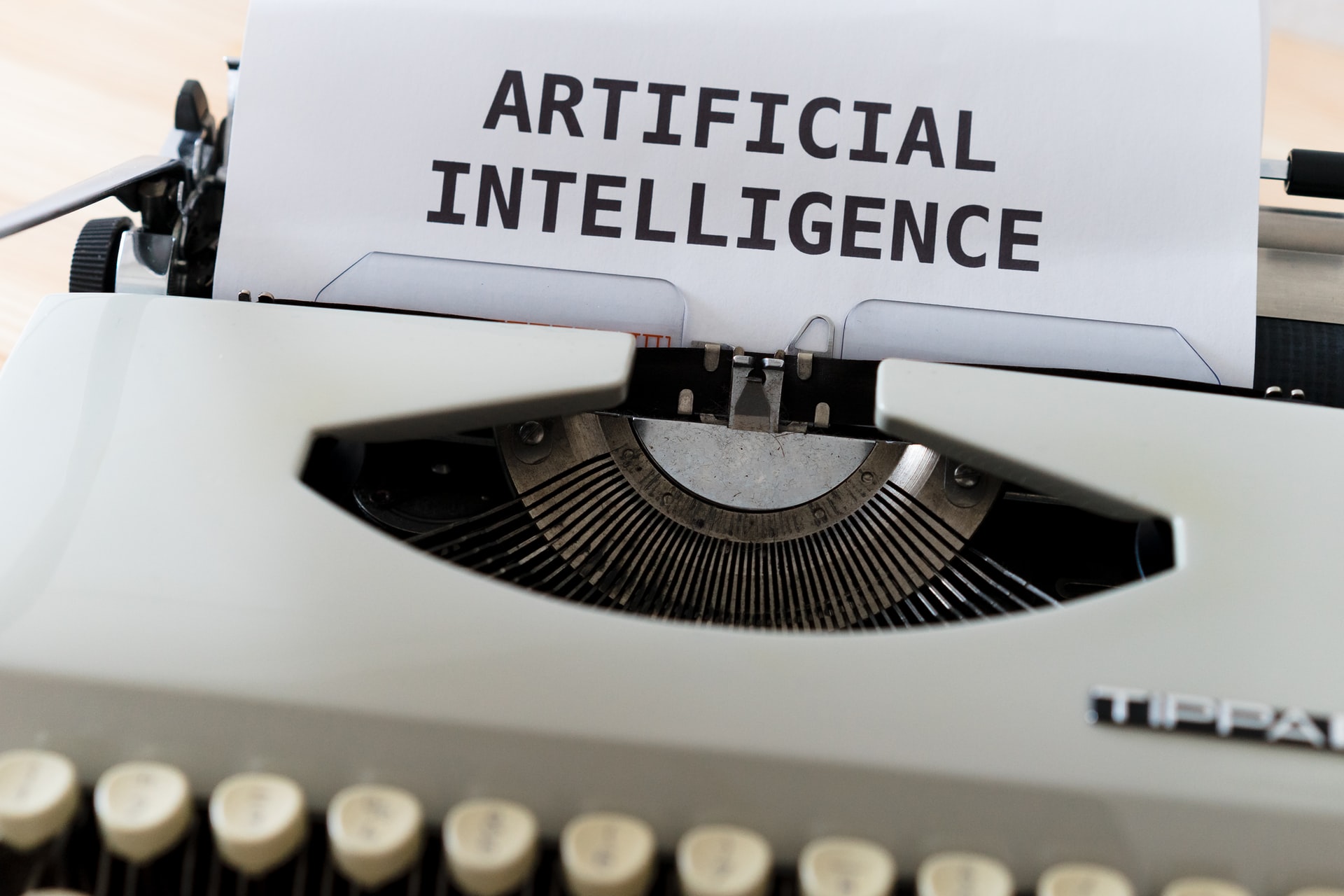
Dr. Alexander Popov will present his research proposal on the topic:
Narrating AI. Speculating through Science and Fiction on the Future of Machine and Human Intelligence
on 22 October, 2020 (Thursday) at 16:30 h.
Artificial intelligence (AI) systems have achieved tremendous successes, such as driving automobiles in urban environments, and beating the best human players at the world’s most difficult games. In parallel with the “AI revolution,” researchers are becoming concerned with the problem of control: how to guarantee that if an artificial general intelligence is created, its values would be aligned with human values. This project will focus on some of the proposed solutions to the AI alignment problem (Russell 2019). It will seek to operationalize the language of this paradigm for the purposes of the humanities and the social sciences. AI has already been productively engaged by a variety of disciplines along this spectrum, among which: sociology and ethics (Wallach and Allen 2008), science and technology studies (Wilson 2011), phenomenology (Dreyfus 2007), literary theory (Ryan 1991), science fiction studies (Canavan 2015). The project will provide a bridge between these fields of study via the figure of AI as a narrative agent (and narrator) in contemporary speculative fiction (SF). Through its highly synthetic nature it will attempt to assemble new instruments for theorizing and historicizing SF, and seek interdisciplinary convergence between broader fields of research. The presentation will outline these theoretical tools and the common framework that will be developed during the project, so that they can be used in the experimental readings of SF texts. These tools will be drawn primarily from four broad fields: AI research, phenomenology, science and technology studies, and literary theory.
Stuart Russell, one of the most influential figures in AI, has proposed inverse reinforcement learning (IRL) as a general strategy for AI alignment. IRL presents a computational agent with behavioral data from humans and forces it to infer on its own a reward schema for the task at hand, based on the observable expert policy and reactions (e.g. satisfaction, anger, etc.). Researchers have used IRL to teach robots to emulate the walk of insects, and self-flying helicopters to perform tricks previously achievable only by human pilots. Their hope is to use a version of this approach to make sure AIs can learn human values in complex social domains and in this way to ensure AI safety. However, Russell’s research plan will inevitably be faced with many inherent difficulties, such as human irrationality and biases, long-term planning and temporal thinking, preference inconsistency and instability, and most importantly – the task of aggregating the preferences of multiple and/or collective agents in a way that resolves incompatibilities and cancels out malicious intent.
Fortunately, AIs will have at their disposal a rich archive of human artifacts to learn from. They will therefore need to learn how to consume them: how to read literature, interpret emotions, etc. To accomplish this, as the hypothesis of the project goes, AI research needs to become more sensitive to the nexus of systems and apparatuses that govern human life – stretching from the material to the semiotic, and even rethought as material-semiotic (Haraway 1990; Barad 2001). Such an approach can benefit from Hubert Dreyfus’ critique of symbolic AI and his contention that experiences of objects are not stored in the brain; they are the world itself. The affordances of the environment are “solicitations to act,” and being-in-the-world is an openness to new ways of gripping the world and exploring the affordances of the environment. The figure of AI in SF is a convenient locus that amalgamates in narrative form all of these preoccupations: learning from the environment, grappling with emergent consciousness, and having to effectively combine conflicting human preferences. AI narrators are of particular interest, since telling a coherent story is in some ways very much akin to understanding how a society functions, how it resolves conflicts and how various agents comprising it coordinate among themselves to solve problems. The presentation will thus outline potential convergences between narratological theories about the structure of fictional stories and worlds, and ideas from utopian studies, which are preoccupied with the ways in which subjective values and goals are assembled at large spatio-temporal scales. Finally, the project will think toward a theory of “ontological realism” – following Fredric Jameson (2005) and focusing on the works of Kim Stanley Robison. It will explore SF as a laboratory for constructing and evaluating ontological models and will argue that perhaps we can enrich our reading of such counterfactual scenarios, if we adopt the point of view of AI readers learning to distill human preferences and to combine them – if not in utopia, then at least in anti-anti-utopia.
–
Alexander Popov is a computational linguist who also works in the broad field of science fiction studies. He obtained his PhD in Informatics from the Bulgarian Academy of Sciences, with a dissertation on the topic of lexical modeling in the context of artificial intelligence and natural language processing. He has worked on projects in the fields of machine translation, automatic information extraction, knowledge representation, and digital reading. He studies literary texts mainly from the theoretical and methodological lenses of utopian studies, ecocriticism and posthumanism, and is also particularly interested in the language of science fiction – from a cognitive and literary-theoretic point of view. He is a long-time editor and author at “ShadowDance” – the oldest media outlet in Bulgaria dedicated to the speculative arts. He teaches science fiction at Sofia University “St. Kliment Ohridski.”